Duke Energy Florida Issues Residential Guidance on Standby Power Consumption
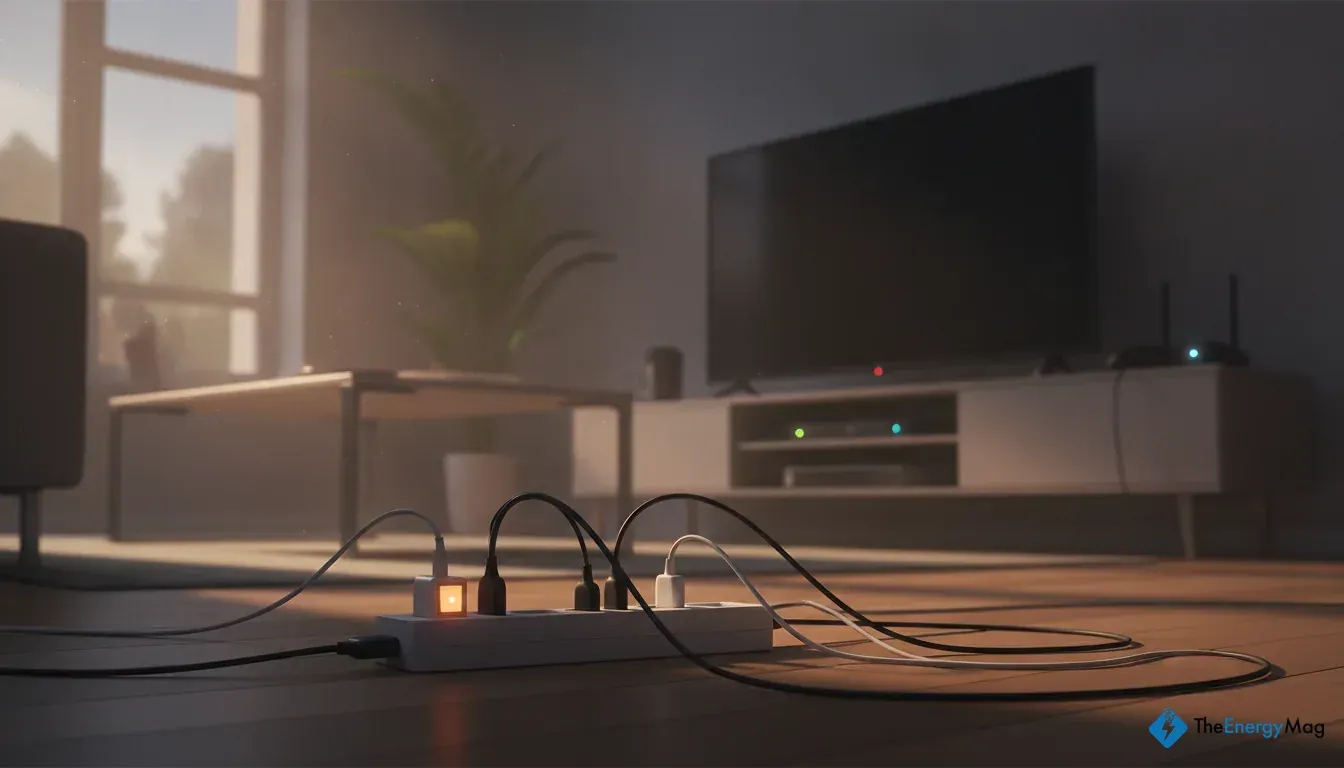
AI-generated image: synthetic visual, not an actual depiction of events, people, or locations.
Key Takeaways
- Duke Energy Florida estimates that standby power consumption accounts for 5% to 10% of a typical residential energy bill.
- A typical household may contain more than 40 'energy vampire' devices, including TVs, chargers, and appliances with LED displays.
- The utility recommends using smart power strips and enabling sleep mode settings to reduce idle energy draw.
- State President Melissa Seixas noted that the cumulative effect of these devices has a measurable impact on consumer costs.
The utility identified common household electronics and appliances that consume electricity 24 hours a day, even when turned off or in standby mode. According to Duke Energy (NYSE: DUK) Florida, a typical home may contain upwards of 40 such devices. These include televisions, cell phone chargers, coffee makers, and any equipment featuring an external power supply, internal battery, remote control, or continuous LED display.
Melissa Seixas, state president of Duke Energy Florida, stated that while individual devices may not draw substantial amounts of energy, the cumulative effect of dozens of idling electronics can result in a noticeable impact on monthly utility bills. The utility noted that almost any device with a constant network connection or internal battery can contribute to this load.
To mitigate these costs, the company recommended four primary actions for residential consumers: unplugging devices in infrequently used areas like guest rooms, utilizing smart power strips that automatically disconnect power to idle equipment, enabling manufacturer-installed energy-saving or "sleep" modes, and upgrading to ENERGY STAR certified products when replacing older technology.